andemagoso.art

o ꙅ o ǫ ɒ m

Ande Magoso is a South African visual artist whose practice is rooted in mythology, symbolism, and the construction of parallel worlds. Born in Kokstad and raised between Umzimkhulu and Kwa-Ngcolosi, Magoso’s early life unfolded across culturally distinct environments within the same province - an experience that continues to shape his artistic language.

His work emerges from an impulse to create alternate realities - spaces that respond to, rather than escape from, the complexities of lived experience. Drawing from his intercultural heritage, with a Xhosa mother and a Zulu father, Magoso repeatedly returns to goats and sheep as central symbolic figures. Integral to both Xhosa and Zulu ritual life, these animals operate as metaphors for cultural overlap, divergence, and continuity, reflecting his lived experience of moving between worlds.

Magoso’s visual universe is populated by hybrid figures - part human, part animal, through which he explores duality, identity, and belonging. These pairings echo the contradictions that define his life: tradition and religion, language and hybridity, sameness and difference, self and other. Rather than presenting these tensions as conflicts to be resolved, his work treats them as conditions to be inhabited.

Working within a surreal and often absurd visual language, Magoso addresses what it means to exist as a young Black man in South Africa, where history, spirituality, and the present moment constantly intersect. His paintings function as fragments of an expanding narrative - each work contributing to a larger mythological continuum rather than standing as a singular, closed statement.

Influenced by the sepia-toned portraiture of Gerard Bhengu, the layered mythologies of Mazisi Kunene’s Amalokotho kaNomkhubulwane, as well as storytelling and film, Magoso’s practice extends beyond the canvas. Characters, symbols, and themes recur, evolve, and migrate across works, forming a living archive of an imagined world shaped by culture, memory, and ritual.

His work forms part of public and private collections in South Africa and internationally, including the National Museum Bloemfontein, Phansi Museum, and The St. Claire Collection.
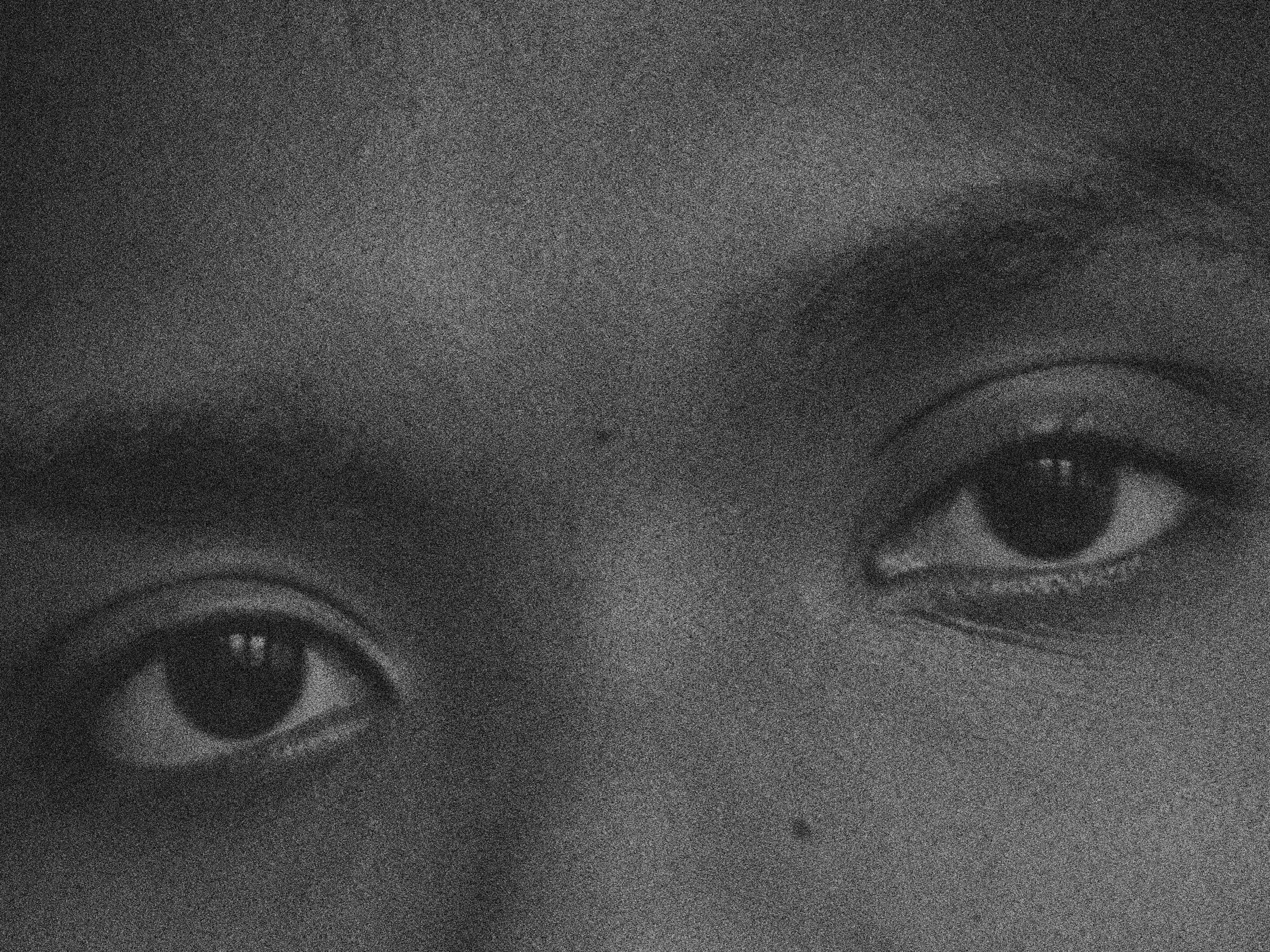
Ande Magoso is a South African visual artist whose practice is rooted in mythology, symbolism, and the construction of parallel worlds. Born in Kokstad and raised between Umzimkhulu and Kwa-Ngcolosi, Magoso’s early life unfolded across culturally distinct environments within the same province - an experience that continues to shape his artistic language.

His work emerges from an impulse to create alternate realities - spaces that respond to, rather than escape from, the complexities of lived experience. Drawing from his intercultural heritage, with a Xhosa mother and a Zulu father, Magoso repeatedly returns to goats and sheep as central symbolic figures. Integral to both Xhosa and Zulu ritual life, these animals operate as metaphors for cultural overlap, divergence, and continuity, reflecting his lived experience of moving between worlds.

Magoso’s visual universe is populated by hybrid figures - part human, part animal, through which he explores duality, identity, and belonging. These pairings echo the contradictions that define his life: tradition and religion, language and hybridity, sameness and difference, self and other. Rather than presenting these tensions as conflicts to be resolved, his work treats them as conditions to be inhabited.

Working within a surreal and often absurd visual language, Magoso addresses what it means to exist as a young Black man in South Africa, where history, spirituality, and the present moment constantly intersect. His paintings function as fragments of an expanding narrative - each work contributing to a larger mythological continuum rather than standing as a singular, closed statement.

Influenced by the sepia-toned portraiture of Gerard Bhengu, the layered mythologies of Mazisi Kunene’s Amalokotho kaNomkhubulwane, as well as storytelling and film, Magoso’s practice extends beyond the canvas. Characters, symbols, and themes recur, evolve, and migrate across works, forming a living archive of an imagined world shaped by culture, memory, and ritual.

His work forms part of public and private collections in South Africa and internationally, including the National Museum Bloemfontein, Phansi Museum, and The St. Claire Collection.